
Measure Twice, Cut Once
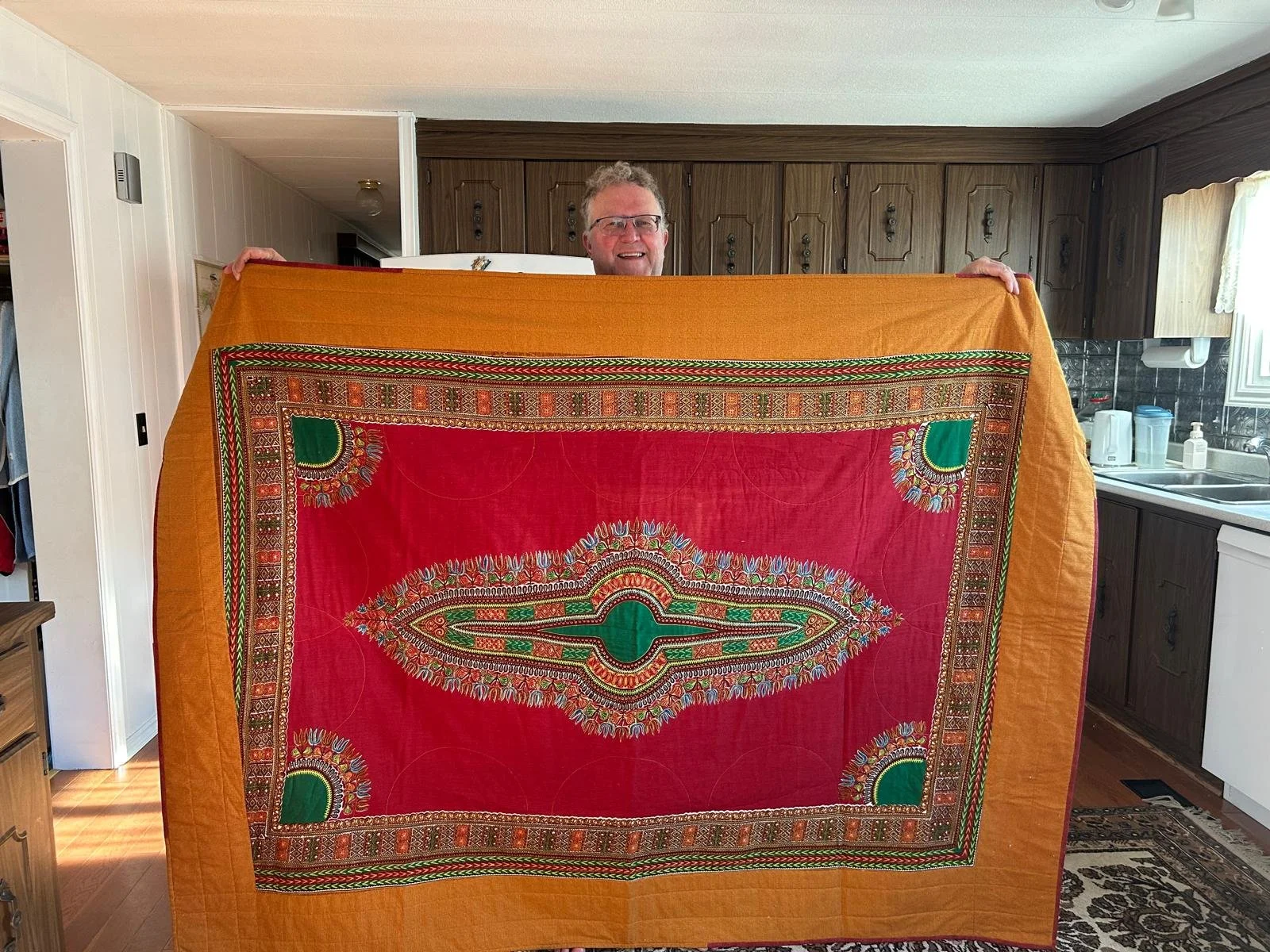
A quilt that I made for a friend. Photo by a friend.
The Interesting Parallels Between Quilting and Marketing
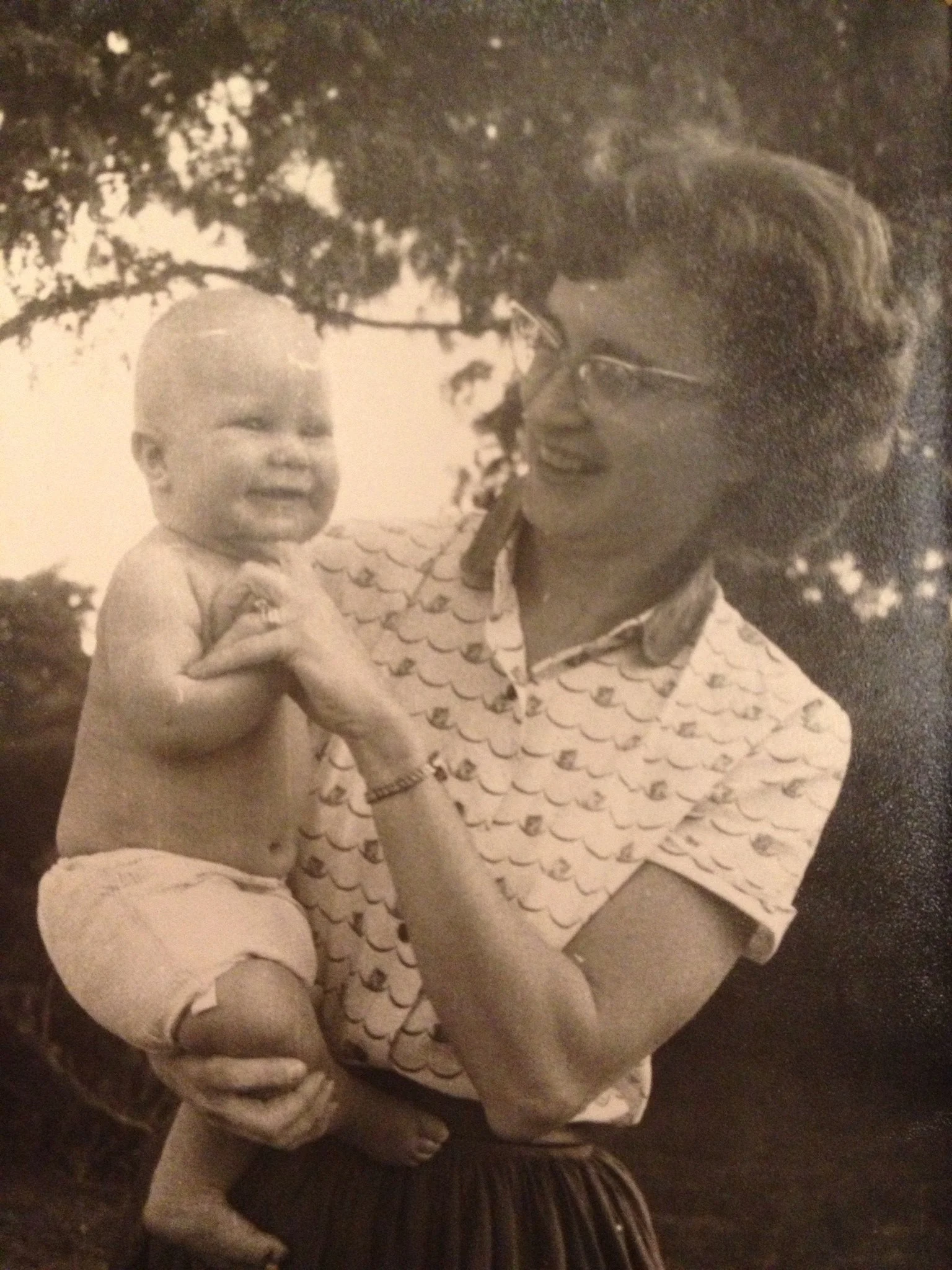
Me and my mother, Beth. Photo by my father, Cliff Nelson
At first glance, quilting and marketing might seem like they exist on different planets. In my day job, marketing involves helping clients sell products and build brands. Quilting, on the other hand, involves repeatedly stabbing fabric (and sometimes my fingers) with a sharp needle.
But the more I sew, the more I realize that similar principles hold them both together.
My quilting journey started with my mother. When she passed away in the late 90s, I inherited about 25 panels of vibrant fabric she had purchased when our family lived in Tanzania during the 60s and 70s. My sister, Tricia, added more after a trip back to the homeland.
As a teenager, Mom taught me to sew, cook, and clean. She was fiercely independent, and that DIY spirit rubbed off on me. For years, I used those skills to sew practical gear for my outdoor recreation pursuits—shirts, jackets, pants, and bags.
Mom had always intended to make those Tanzanian panels into quilts, but life got in the way. During the pandemic, I finally decided to do something useful with them. I bought a Husqvarna Viking machine, fired it up, and over the next few years, made quilts for family members.
That’s when the overlap between my hobby and my profession dawned on me. Here are 9 ways the worlds of quilting and marketing have some parallels.
First, A Bit of Context: Materials Matter
Many of the bold, colourful fabrics in my quilts come from East Africa. Textiles there, like the Kitenge and Kanga, aren't just decorative; they represent cultural identity and storytelling, all wrapped together.
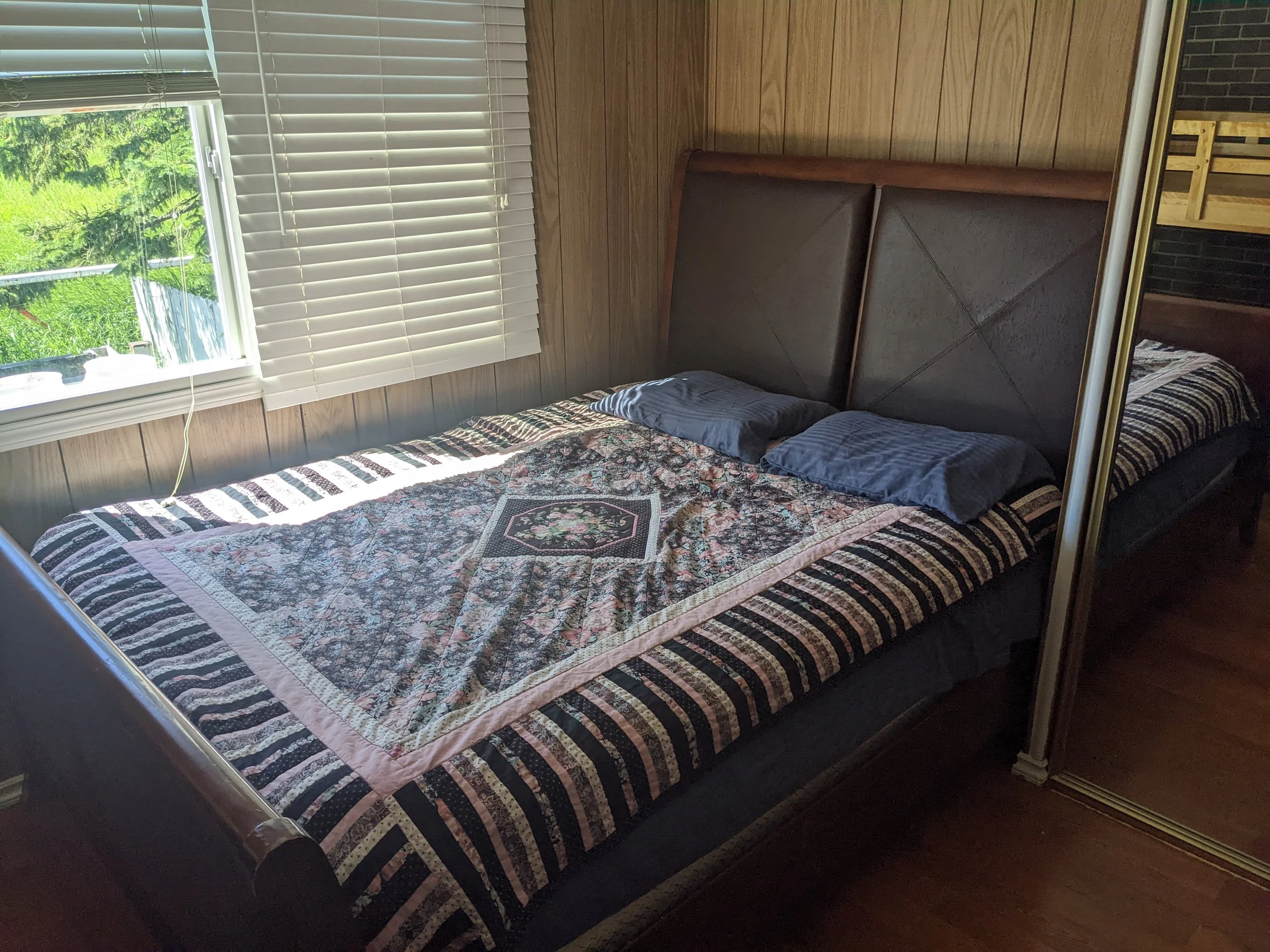
A quilt that my mother sewed long ago. Photo by Jeff Nelson.
Kitenge: Known globally as "African wax prints," these bright, densely patterned cotton cloths are widely used in daily life.
Kanga: A lighter-weight fabric that usually features a border, a central design, and a Swahili proverb printed across the bottom.
When I sew with these fabrics, I’m not just assembling patterns; I’m stitching together memories. This carries directly into marketing: context, history, and understanding your materials shape the final outcome.
Here is how the workflows parallel one another:
1. Respect the Pattern (Strategy)
Every quilt begins with a pattern, but the "feel” and “emotion" of the final product are determined by the material. The pattern tells you how to build it; the materials determine the experience.
The Marketing Parallel: Strategy always comes first, but strategy requires choosing the right materials: the audience, the message, and the channels. Just like fabric selection, these early choices dictate the result. You can't just start cutting and sewing.
2. Accuracy is Everything (Alignment)
In quilting, if your cuts are inaccurate or your blocks aren’t square, the entire quilt shifts. And here is the hard truth: you cannot stretch cotton to make a short piece fit.
The Marketing Parallel: If different parts of your company say different things, or your targeting is "a little off," the whole strategy warps. You can’t stretch a bad product to fit a good market. Alignment must be precise.
3. The Iron is Your Best Friend (Refinement)
Novice sewers think sewing is about the machine. Experienced sewers know it’s mostly about the iron. The rhythm is: press, sew, press, sew. Pressing is the unglamorous work that keeps the fabric flat and cooperative.
The Marketing Parallel: “Pressing” is the equivalent of CRM hygiene, proofreading, and testing workflows. It’s the boring prep work. If you skip it and rush to the “fun part” (the campaign launch), your execution will have wrinkles.
4. Pin and Baste (Preparation)
Before the machine starts moving, you have to pin and baste the layers (I use safety pins) to stabilize them so the fabric doesn't shift while you work.
The Marketing Parallel: This is your infrastructure prep: setting up tracking tools, organizing content, and reviewing automations. If you don’t "pin" your infrastructure down before you launch, things are going to slide around the moment you hit "publish."
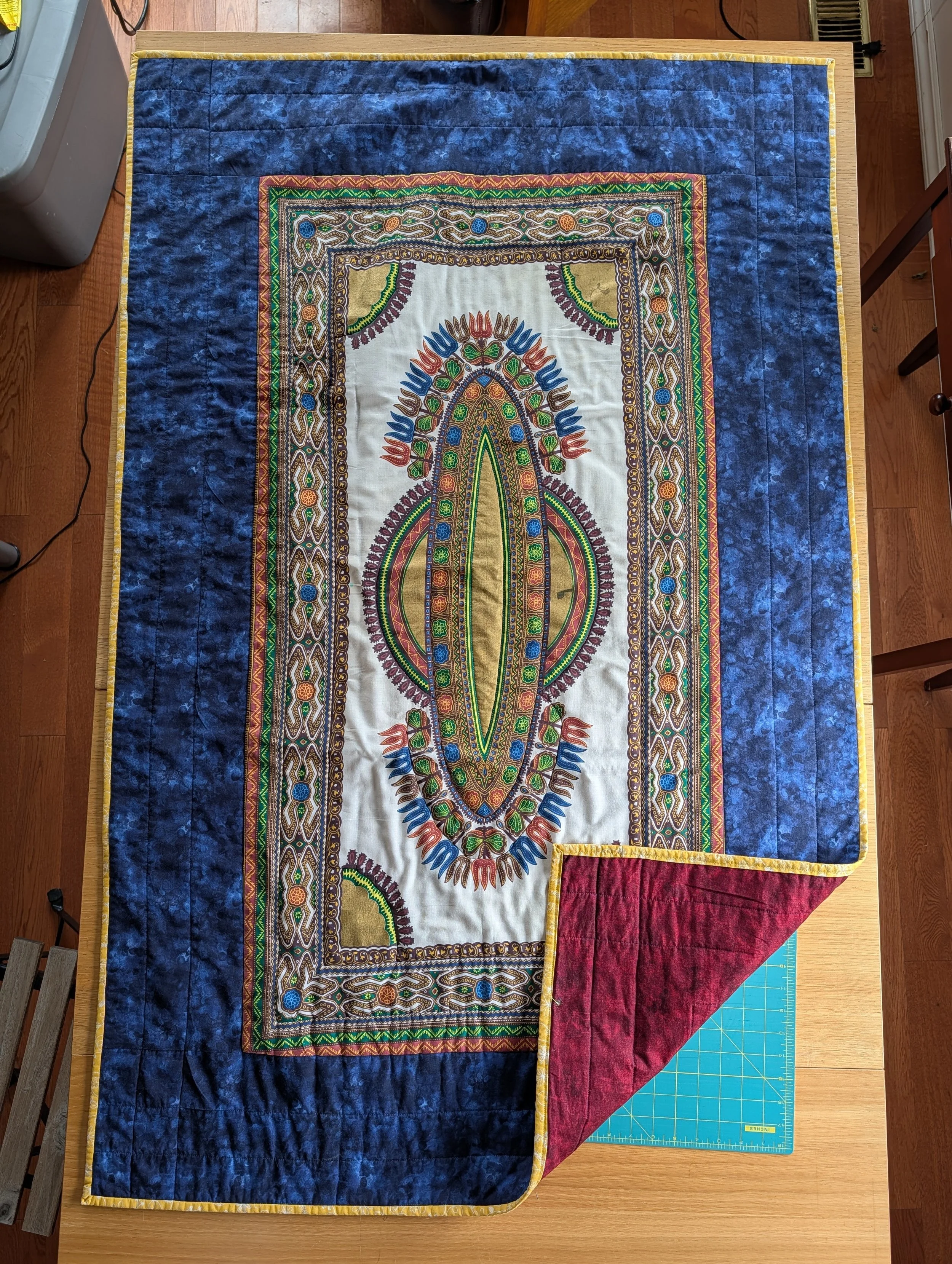
Quilt by Jeff Nelson. Photo by Jeff Nelson.
5. Check Your Tension (Balance)
If the thread tension on a sewing machine is too tight, the quilt puckers. If it’s too loose, the stitches fall apart. You want the stitches to be visible and even.
The Marketing Parallel: This is exactly like messaging. Push too hard with a hard sell (too tight), and people disengage. Go too quiet (too loose), and people forget you exist. You have to find the zone.
6. Piecing It Together (Integration)
I recently made a "Bacon Strip" table runner where the fabrics looked completely mismatched on their own. But once they were sewn together, they formed a beautiful, coherent pattern.
The Marketing Parallel: SEO, ads, content, and email can often feel like disparate tactics. Your job as a marketer is to stitch (pun intended) them into a unified experience so the customer sees the larger pattern, not just the individual scraps.
7. The Seam Ripper (Pivoting)
My mother used to tell me: “If you can rip, you can sew.” Every quilter keeps a seam ripper nearby because mistakes are inevitable. Occasionally, I'll accidentally sew the back of one piece to the front of another (rookie mistake). It requires ripping out an hour's worth of stitches and resewing the seam. Ugh.
The Marketing Parallel: In business, we often call this "pivoting," which is just a fancy way of saying we fixed a mistake and tried again. The sooner you rip out the bad stitch and make the adjustment, the better the final product will be.
8. Binding the Edges (Closing the Loop)
Binding is the final step that seals the raw edges, making the quilt functional and complete.
The Marketing Parallel: Closing the loop means reporting on results, following up with leads, and ensuring continuity. Don’t leave your campaign with raw edges fraying in the wind.
9. Done is Better Than Perfect (Finishing)
My quilts are not perfect. Sometimes the corners are off-kilter, or the binding is crooked. But when I hand a quilt to someone, they don’t get out a ruler; they see the intent and the warmth.
The Marketing Parallel: Marketing isn’t always as forgiving as family members receiving a gift, but there is immense value in momentum. A campaign that is 95% polished and launched will always outperform a "perfect" campaign that is still sitting in your drafts folder.
Conclusion
Whether you are sitting behind a sewing machine or a marketing dashboard, the foundation of success is exactly the same: plan well, prepare your materials, and finish what you start.
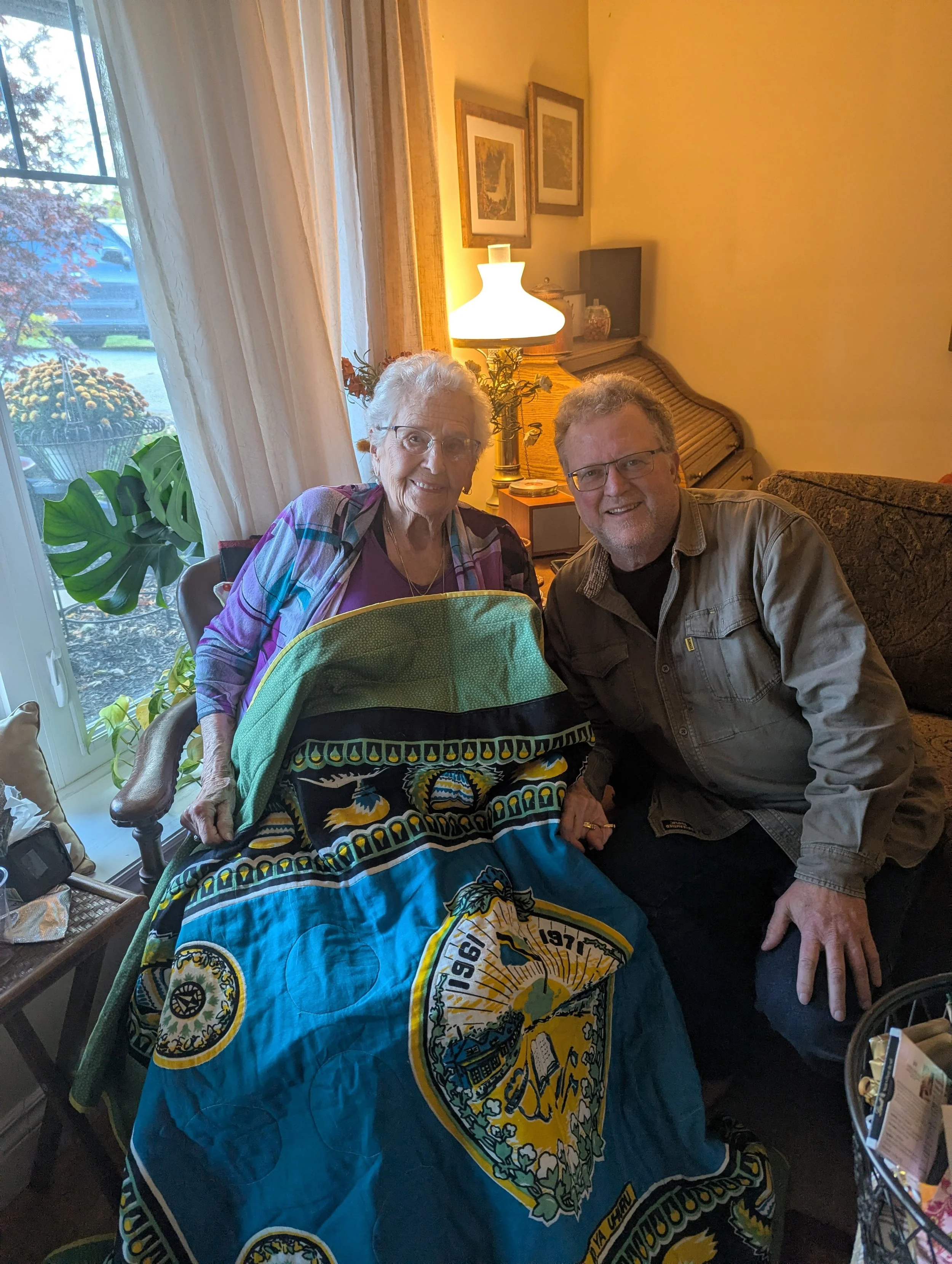
The kanga quilt that I gave to my step mother last year. I think my sister, Anna, took the photo.
Measure twice, cut once, and whatever you do, don’t be afraid to rip out a few stitches along the way.
What about you? Have you ever found an unexpected parallel between your weekend hobbies and your daily work? I’d love to hear about it in the comments!