
Before You Rebrand, Fix Your Position
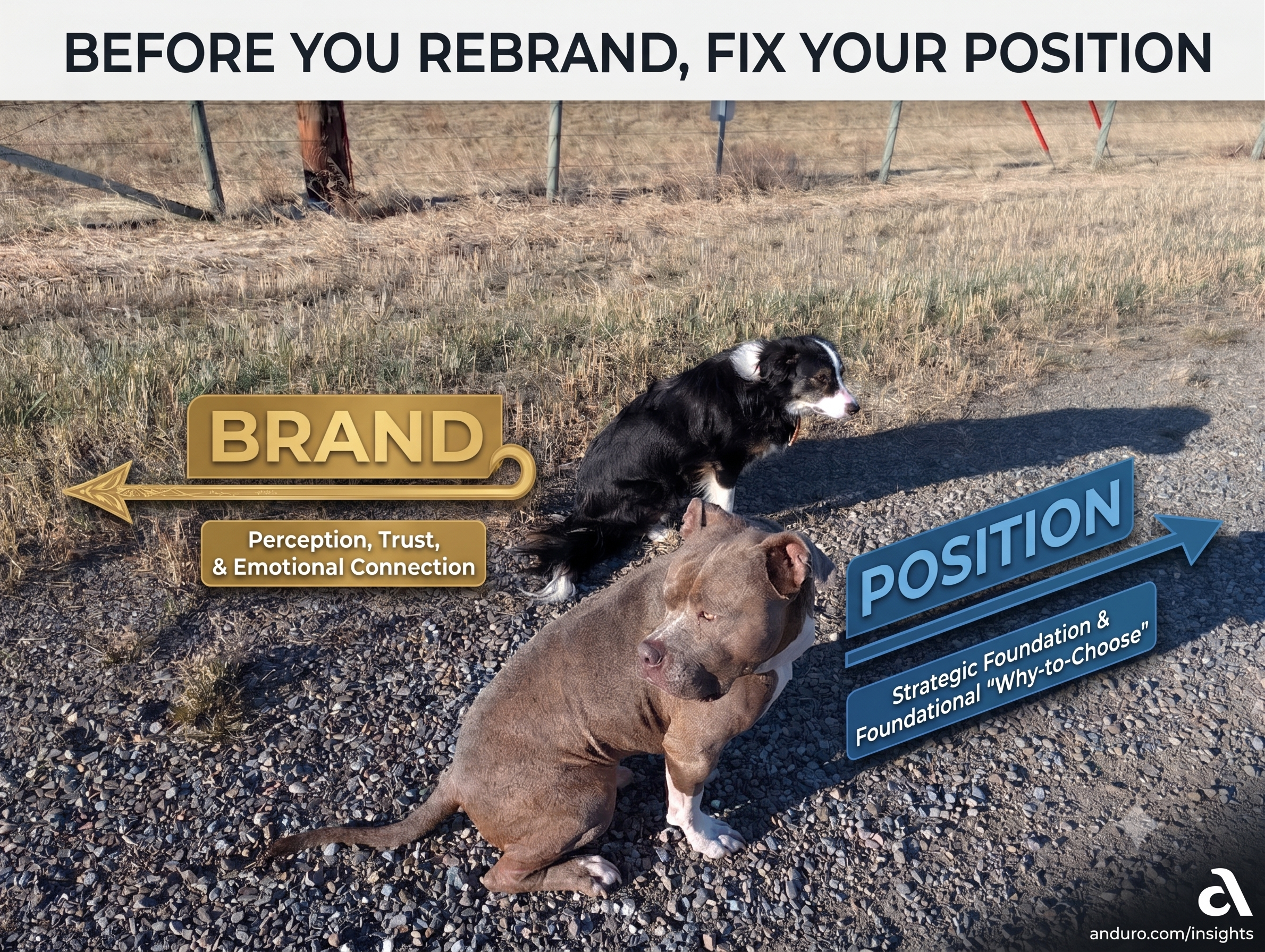
Photo by Jeff Nelson. Text Overlay by Gemini
Many small and medium-sized companies think they have a brand problem.
Sales are slow. Leads are weak. Customers are choosing competitors. The website feels tired. The logo looks dated. The marketing feels inconsistent.
So the answer seems obvious.
Fix the brand.
Maybe.
But often, the real problem isn't the brand. It is the position.
That distinction matters.
Brand helps shape how people feel about a company. It influences recognition, reputation, trust, loyalty, and emotional connection. It includes the name, logo, colours, visual identity, tone, story, customer experience, and the reputation that builds over time.
Position does a different job.
Position defines where the company fits in the market compared with the other choices available to the buyer. It answers a harder and more strategic question:
Why should this buyer choose us instead of another acceptable option?
That question has to come first.
A company can have a polished brand and still be unclear in the market. It can have a professional logo, a modern website, consistent colours, and a nice tagline, but still fail to explain why it is the better choice.
If buyers cannot see a meaningful difference, they will usually default to price, convenience, familiarity, or the competitor that feels safer.
That is not a logo problem.
It is not a colour problem.
It is not a “we need a better tagline” problem.
It is a position problem.
For small and medium-sized companies, position comes before brand. Before investing in a rebrand, the company needs to understand who it serves, what the buyer values, what alternatives the buyer is considering, and what makes the company meaningfully different.
This becomes especially important when the market already knows the company exists.
If no one knows about you, visibility matters. But if people know about you and still don't choose you, the problem runs deeper. The market may not understand your value. The company may not feel distinct. The offer may not seem relevant. The buyer may not see a clear reason to move forward.
In that situation, a new logo will not fix the problem.
A brand can help create trust. It can reduce anxiety. It can make people feel more confident. That matters because buyers want to feel they are making a low-risk decision. They want to feel heard, understood, and reassured.
But those feelings are much easier to create when the company already has a clear position.
A retail store does not need to be “better” than every other store. It needs to be clear about who it is for, what kind of experience it offers, and why a certain customer would prefer it.
A professional services firm does not need a clever tagline before it understands where it fits in the buyer’s world.
A local service company does not need a new colour palette to understand why customers choose one provider over another.
This is where branding work often starts too soon.
Branding is valuable. A strong brand can create long-term business value. It can make a company more memorable, more trusted, and more likely to be chosen again. For larger companies, a brand can become one of the most important assets.
But for many smaller companies, the urgent problem is not that the market has failed to remember them.
The urgent problem is that the market has not been given a clear enough reason to choose them.
That is why position comes first.
Position creates the strategic foundation. Brand expresses that foundation. Without position, branding can become decoration. With a strong position, branding becomes much more powerful because it has something specific to communicate.
This is why marketing strategy should happen before the visible parts of marketing are built. In Anduro’s ROAD framework, the early work is Research and Orient. Research helps identify what is actually happening in the market. Orient helps the company make clear strategic decisions about where it fits, who it serves, and why it should be chosen.
Only then does it make sense to build the brand, website, campaigns, and marketing system around that decision.
Brand and position are not enemies. Both matter.
But they are not interchangeable.
If your company is known but not chosen, do not start by asking whether the logo needs to change.
Ask whether your position is clear.
Do the position work first.
Then build the brand around it.