
The Little Lies Marketing Tells
An Honest Reflection on Marketing, Sales, and the Things Companies Say About Themselves
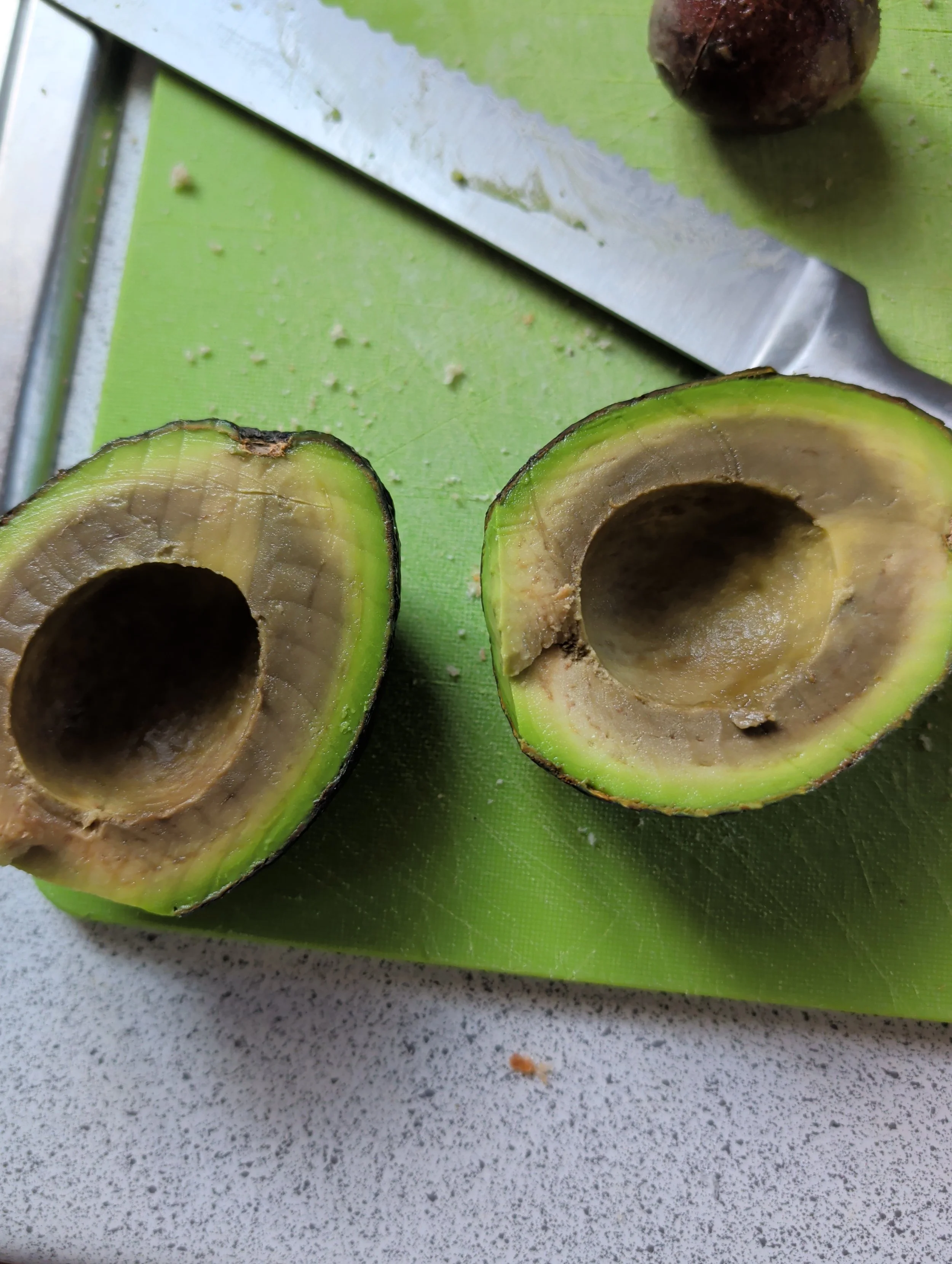
You Only Know it’s Bad After You Cut it Open. Photo by Jeff Nelson
Recently, I have been thinking about lying. The trigger was cutting open this avocado and finding that it was rotten.
(How to tell if your avocado is rotten?)
Admittedly, this is probably not the best opening sentence for a marketing newsletter. It may trigger spam filters, alert the legal team, and cause a few of you to quietly wonder if I am about to confess to something serious.
I am not.
What I am really thinking about is the kind of lying that happens every day in marketing and sales. I am not talking about fraud. I am not talking about fake testimonials, fabricated results, or Fyre Festival-level deception.
I am thinking about the softer kind of lying. The kind that sounds a lot like optimism.
The kind that shows up when a salesperson says, “Yes, we can definitely do that,” while silently calculating whether the delivery team will ever forgive them.
The kind that happens when a company proudly declares, “We are different,” even though its website, brochure, and sales deck look suspiciously identical to those of everyone else in the industry.
In other words, I am thinking about lies that marketing professionals often use.
The Lie I Hear Most Often
If I had a dollar for every lie I hear from companies, I could fund a very nice vacation. It usually goes like this:
"We are different."
To be fair, they usually are different! Every company has its own rich history, unique culture, weird habits, brilliant strengths, and a strange internal language that nobody outside the building understands. One company is genuinely faster. Another is meticulously careful. Another has unmatched technical expertise.
So, when a company says, “We are different,” they aren't being malicious. They are telling their truth.
The problem is that the difference is entirely invisible to the customer.
From the outside, companies often look like clones. They all claim to offer quality, service, experience, innovation, reliability, and customer focus. The words are familiar. The stock photos are polished. But doubt creeps into the buyer’s mind: Is this actually true, or is it just what they are supposed to say?
Being different is simply not enough. You have to be different in a way that matters to the customer, and you have to explain it clearly enough that they actually believe you.
Sales Optimism: The Hopeful Lie
Sales introduces a slightly different flavour of lying. Again, it isn't malicious—it’s hopeful.
A prospect asks, “Can you help us get more leads?”
The salesperson smiles and says, “Yes.”
That might be entirely true. But a much better, more honest answer would be: "Maybe. But first, we need to understand why you aren't getting enough leads right now."
That answer is honest. It is also longer, significantly less exciting, and much less likely to produce a signed contract before the end of the quarter.
So, salespeople simplify. They manufacture confidence before all the facts are known, speaking from a mix of experience, instinct, and hope. And honestly? Buyers need that. Nobody wants to buy from a vendor who says, “Well, this could all go horribly wrong, but let’s invoice you anyway and see what happens.”
But there is a fine line between confident optimism and pretending.
Bad sales says: “Yes, absolutely. No problem.”
Good sales says: "Let's find out what's really going on."
Polite Lies
Then, we have the polite lies. This is the diplomacy marketing uses to avoid saying the sharper, more uncomfortable thing out loud. They are designed to keep meetings productive and feelings intact.
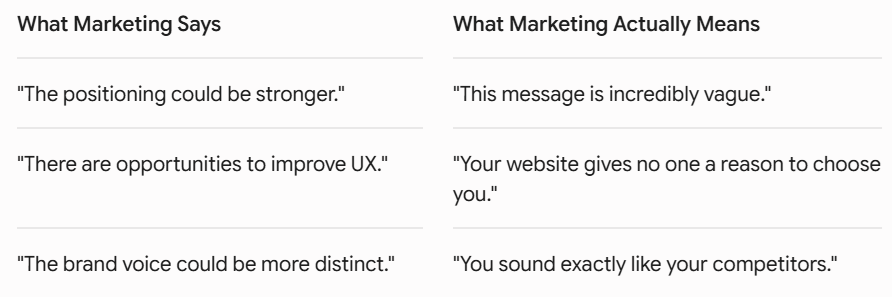
These statements aren't dishonest; they are just heavily bubble-wrapped. The danger is that when you soften the truth too much, the real issue becomes impossible to see.
The sharper truth is always more useful. Yes, honesty can be uncomfortable, but it is exactly where better marketing begins. Marketing and sales both require honesty—but honesty still needs manners.
Brutal honesty is often just laziness wearing work boots. Useful honesty takes effort. It requires saying the true thing in a way the other person can actually hear and accept.
The Better Question
The phrase "we are different" usually fails because it is an incomplete sentence. If you want to stop accidentally lying to your audience, you have to finish it:
Different how?
Different for whom?
Different compared to what?
Different in a way that saves time, reduces risk, improves quality, or prevents mistakes?
A company might say, “We are different because we care.” That is lovely. But most of your competitors will also claim to care—even the ones who clearly do not care are perfectly comfortable saying they do.
"We are different" is not wrong. It is just unfinished. The better question is: What makes you different in a way your customers actually care about?
A Final Thought
The art of lying in marketing is not about becoming better at deception.
It is about noticing when we are tempted to exaggerate, simplify, soften, or pretend.
Sometimes the falsehood is in the company’s message. Sometimes it is in the sales promise. Sometimes it is in the customer’s assumption. Sometimes it is in the company’s own self-image.
The best marketing does not invent a better lie.
It creates better clarity.
Find the critical point.
Keep the messaging clear.
Make it believable.
And, when possible, make it interesting enough that people do not fall asleep halfway through the paragraph.