
Good Product Comes First: The Wandering Inn
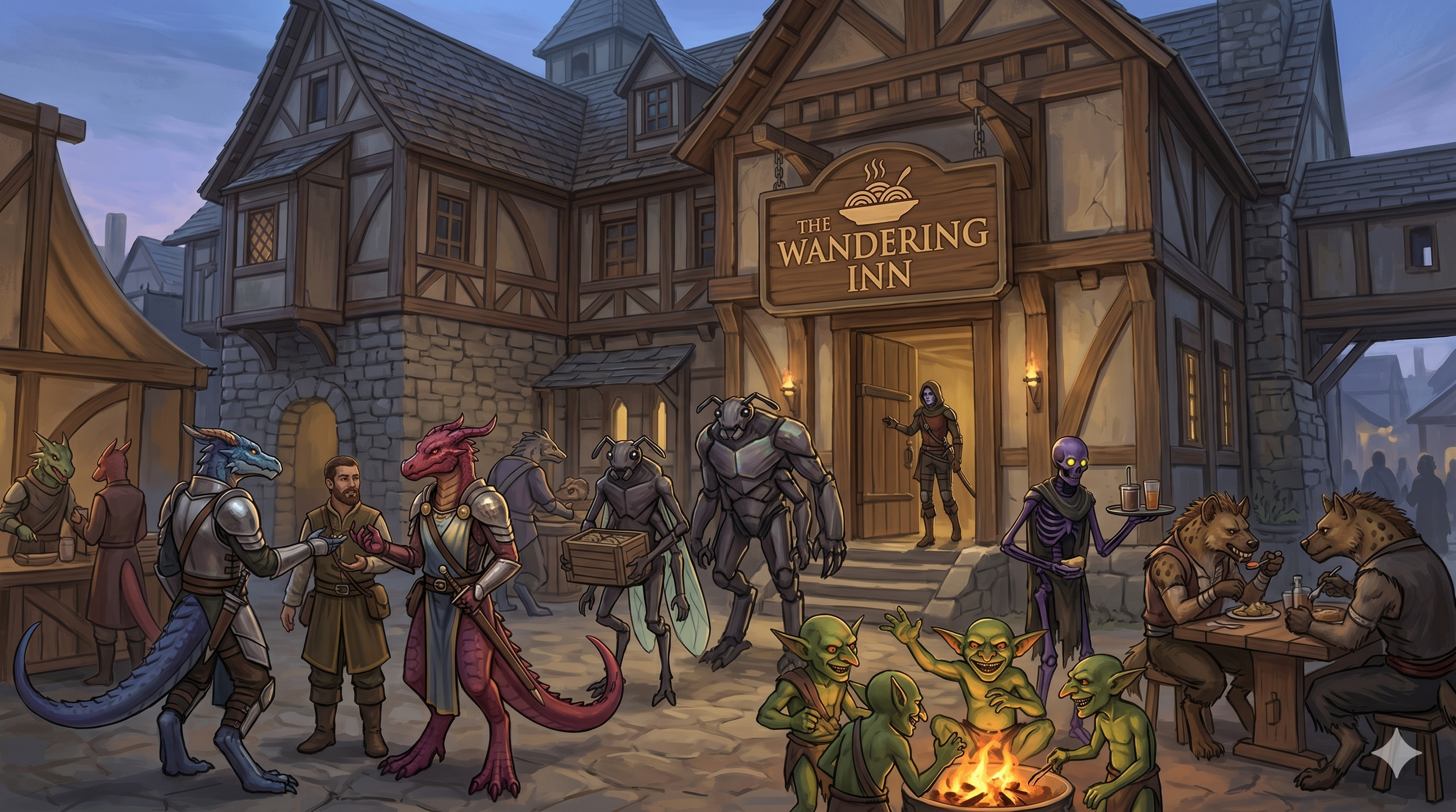
Created by Jeff Nelson, using Gemini
I spend a lot of time thinking about marketing.
That makes sense. I run a marketing company. I talk with business owners about websites, SEO, Google Business Profiles, paid ads, content, lead generation, positioning, and strategy.
All of those things matter.
Marketing can make a company more visible.
Marketing can help the right people understand what a company offers.
Marketing can build trust.
Marketing can generate leads.
Marketing can make it easier for buyers to choose one company over another.
But I keep coming back to a simple point:
Marketing cannot fix a product that people do not want.
If the product is not good, the market and the marketing eventually stop mattering.
That may sound obvious, but I think it is easy to forget. When I talk with companies that want to grow, the first questions are often tactical:
“Do we need a better website?”
“Should we run ads?”
“Should we post more on LinkedIn?”
“Should we improve our SEO?”
“Should we send more emails?”
Those are useful questions. I ask them all the time.
But I do not think they are the first question.
The first question is much more basic:
Do we have something people actually want?
Product Comes Before Market and Marketing
In Intentional Marketing, we often look at three core elements:
Product
Market
Marketing
The product is what we offer.
The market is the group of people who might care.
Marketing is how we create interest, trust, and action.
All three matter. But when I look at struggling businesses, I often wonder whether they are trying to solve a product problem with a marketing solution.
A good product gives marketing something real to work with. A mediocre product forces marketing to compensate, explain, persuade, discount, or distract.
In my experience, that usually does not work for long.
A good product creates its own energy. Customers talk about it. They come back to it. They recommend it. They forgive small flaws because the core experience is valuable.
A mediocre product creates resistance. Even if marketing brings people in, the product does not hold them.
That is why I think marketing should not begin with promotion. It should begin with diagnosis.
Before asking, “How do we sell this?” I think we should ask:
Why should anyone care?
The Wandering Inn Reminded Me What a Good Product Feels Like
I finished listening to The Wandering Inn on Audible today. It was written by pirateaba and narrated by Andrea Parsneau.
It is long. Very long. The Audible version is roughly 48 hours.
And I loved it.
That surprised me a little. A 48-hour audiobook is a major commitment. At the beginning, I wondered whether it would be too long. I wondered whether I would lose interest. I wondered whether I would get tired of the story.
But that did not happen.

Created by Jeff Nelson using ChatGPT
I was pulled into the story. I found the world interesting. I cared about the characters. The main character, Erin Solstice, is human, but the world around her is filled with many different species and cultures, including Drakes, Antinium, Goblins, Skeletons, and Gnolls. That variety gave the story depth. It also gave the narrator a much bigger challenge.
Andrea Parsneau’s narration added a great deal. In fact, I thought her performance was amazing. She did the voices for all of the characters, and each one felt distinct, believable, and alive. She did not just read the story. She performed it.
That is when I started thinking about product quality.
The length could have been a problem for me. In many cases, 48 hours would feel like too much. But because the story was good and the narration was so strong, the length became part of the value.
A mediocre 48-hour audiobook would make listening feel like work. A remarkable 48-hour audiobook feels like a gift. I expected to keep thinking, “This is too long.” Instead, I kept thinking, “Great, there is more.”
That is a sign of a good product.
I wanted more.
Marketing Cannot Manufacture Desire Forever
This is where the marketing lesson became clear to me.
Marketing can attract attention, but it cannot create lasting demand if the product does not deliver.
I might get someone to click once.
I might get someone to book a meeting.
I might get someone to try the service.
I might even get someone to buy.
But if the product disappoints, the momentum stops.
The customer does not return.
They do not refer.
They do not leave a strong review.
They do not become an advocate.
They do not move from buyer to believer.
I think this is one of the most important lessons in marketing.
The best marketing is much easier when the product is genuinely useful, interesting, valuable, or enjoyable. In those cases, I am not trying to invent a story. I am helping the right people discover the truth.
That is a very different job.
What Businesses Can Learn From This
A business does not need to create a fantasy epic to learn from this.
The same principle applies to a contractor, consultant, software company, school, retailer, or professional service firm.
Before spending heavily on marketing, I think a company should ask some basic questions:
Is the offer clear?
Does it solve a real problem?
Do customers actually want it?
Is it meaningfully better, faster, easier, safer, more enjoyable, or more reliable?
Would customers recommend it after experiencing it?
Would they come back?
Would they pay for it again?
If the answer is yes, marketing has something real to build on.
If the answer is no, more marketing may simply expose the weakness faster.
That is not a comfortable thought, but I think it is an important one.
The Role of Marketing
None of this means marketing is unimportant.
I obviously believe marketing matters.
But I believe marketing works best when it is connected to a product that deserves attention.
Good marketing helps define the market. It explains the value. It identifies the right buyers. It creates visibility. It builds trust. It removes confusion. It helps people take the next step.
But the product still has to carry the weight.
In simple terms:
The Product creates value.
The Market defines who cares.
Marketing helps them notice, understand, trust, and act.
When those three elements work together, growth becomes much easier.
When they do not work together, marketing often becomes a struggle.
The Real Test
The real test of a product is not whether the company likes it.
The real test is whether the customer wants it.
Do they stay?
Do they return?
Do they tell others?
Do they ask for more?
That is why The Wandering Inn was such a useful reminder for me. A 48-hour audiobook could easily have felt like too much. But because the story and the performance were so good, the length was not the problem. For me, the length became part of the appeal.
That is what every business should want.
Not just a product that people tolerate.
A product people want more of.
That was my experience with The Wandering Inn.
I finished it today, and instead of feeling relieved that a 48-hour audiobook was over, I wanted more.
Final Thought
If a company does not have a product people want, the market and marketing cannot save it.
But if a company does have a good product, marketing becomes much more powerful.
The goal is not to use marketing to cover up weakness.
The goal is to use marketing to help the right people discover something worth choosing.